

5: Detonation
("Spark Knock")
Detonation, often called pinging, is nothing less than a series
of small explosions that take place within an engine's combustion
chambers. It can be extremely destructive, breaking pistons,
rod bearings and anything else from the pistons down that a large
hammer could damage. It is best avoided.
Pinging is a descriptive name for detonation. Pinging is that
high pitch ringing sound that an engine sometimes makes when
the throttle is opened with the engine under load. It sounds
as though the cooling fins are ringing as they do when you quickly
run your finger nail over their edges.
Pinging indicates trouble. Trouble that does damage. That damage
can be quick and catastrophic but usually isn't. Most often,
detonation occurances are small in energy and the engine is able
to absorb the punishment, at least temporarily. However, over
time, even light detonation does harm; weakening pistons and
overheating the top piston rings.
Severe detonation can destroy an engine literally in a heart
beat.
HOW IT HAPPENS
After a spark ignites the air/fuel mixture in an engine's combustion
chamber, the flame front travels across the chamber at a rate
of about 5000 feet per second. That's right, one mile per second.
Flame front travel for detonation is closer to 19,000 to 25,000
feet per second; the same rate as in dynamite. The difference
between normal combustion and detonation is the rate at which
the burning takes place and therefore the rate of pressure rise
in the chamber. The hammer like blows of detonation literally
ring the metal structures of the motor and that is what you hear
as pinging.
Detonation occurs when the air/fuel mixture ignites before it
should. Normal burning has the flame front traveling from the
spark plug(s) across the chamber in a predictable way. Peak chamber
pressure occurs at about 12 degrees after top dead center and
the piston gets pushed down the bore.
Sometimes and for various reasons a second flame front starts
across the chamber from the original source of ignition. The
chamber pressure then rises too rapidly for piston movement to
relieve it. The pressure and temperature become so great that
all the mixture in the chamber explodes. If the force of that
explosion is great enough --- the engine breaks.
WHAT CAUSES IT
Anytime the combustion chamber pressures become high enough,
detonation occurs. Anything that creates such pressure is the
cause of detonation.
Here is a list of possible
causes, it may not be complete:
* Timing - if the spark happens too soon, the chamber pressure
may rise too high and detonation results.
* Gasoline - if the gasoline burns to quickly (a too-low octane
rating), high pressure and detonation are likely.
* Glowing objects - a piece of carbon, a too hot spark plug or
other glowing object can start burning too soon. Pressure rises
too high and detonation can happen.
* Cranking pressure - Any given combustion chamber has a maximum
pressure (before the spark is struck) beyond which detonation
is likely.
* High engine tempertures - High chamber temperatures raise cranking
pressure and promote detonation.
* Lean jetting - Weak air/fuel mixtures can result in very uneven
mixtures within the chamber, uneven burning, pressure spikes
and detonation.
Note that each of these possible causes are relative. That is,
there is no absolute timing, mixture strength or ignition timing
that is going to guarantee detonation. Equally, there are no
absolute settings that guarantee that detonation does not occur.
Motorcycle manufacturers, Harley-Davidson included, spend a great
deal of time and money fine tuning their engines to eliminate
or nearly eliminate detonation. When we change the engine design
in the direction of detonation by, say, raising the compression
pressure with domed pistons or milled heads, we increase the
chance of detonation actually occurring.
Gasoline quality helps determine whether or not an engine is
going to detonate. The higher the octane rating, the lower the
chance of detonation.
Modified engines often have had several engine design changes
that, combined, increase the likelyhood of detonation. High compression
pistons, thin head gaskets, some alternative ignitions, some
exhaust system designs, etc.
Stock street bike carburetion is very lean for emissions purposes.
When the air cleaner and/or exhaust system are replaced by less
restrictive components, this stock jetting becomes impossibly
lean. The engine does not run well and detonation is likely at
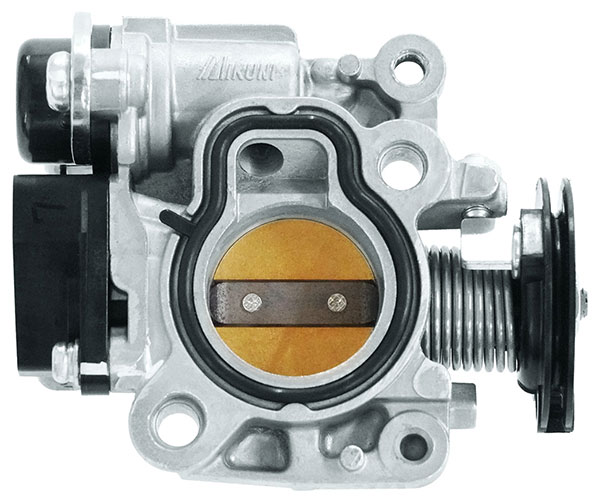
some throttle settings. Re-jetting or wholesale carburetor replacement
(Mikuni!) is the cure for this particular problem.
If one fits high compression ratio pistons together with an early
closing (mild) cam, the cranking pressure may become high enough
that serious, engine-deadly detonation is likely. How much is
too much you ask?
Well (Rule of Thumb here), Evolution engines are fairly safe
against detonation if the cranking pressure remains at 180 psi
or less. The TC88 motor can dodge detonation if the pressures
remain at 190 psi or less. Keep in mind that these maximums are
for fairly stock engines; no porting, no chamber work and no
squish areas.
A well shaped combustion chamber with squish effect is much less
likely to detonate than most stock examples. The main reason
the TC88 engine can withstand higher cranking pressures than
the Evo is its better chamber design.
Cranking pressure here refers to the number one gets by conducting
a normal compression test. This test is done by removing the
spark plugs and fitting a compression gage in one of the spark
plug holes. The throttle is then held open and the engine cranked
with the starter until the gage needle stops climbing. The resulting
number is the cranking pressure.
Ignition systems are important. If the spark plugs fire too soon,
the combustion pressure may rise too quickly bringing on detonation.
The main reason for having an advance curve built into an ignition
system is to avoid detonation. The correct timing for any given
engine design (and state of tune) varies with rpm and throttle
setting.
Hot spots is more than a night club. If your engine has been
running rich or burning oil, it may have thick bits of burned-on
carbon. This carbon build-up can literally glow and, under the
pressure of compression, start burning before the spark is struck.
This leads to severe pressure excursions and, often, detonation.
Lean carburetion can lead to detonation. Uneven combustion in
over-lean air/fuel mixtures can escalate pressures and bring
about sudden explosive burning. Also, lean mixtures elevate chamber
temperatures which, as you now know, can lead to dreaded detonation.
If all this leads you to think that your engine is in imminent
peril, then we have succeeded. Detonation is a terrible thing
to happen to your expensive Harley engine. The pressures of those
explosive events can be enough to hammer rod bearings, pistons
and rings into useless junk.
If you hear the tell-tale ringing of detonation next time you
open the throttle on a hot day or at low rpm or after a tank
of questionable gasoline, back off the throttle and ride carefully
until you can find and render harmless this demon visiting destruction
upon your motor. |
|